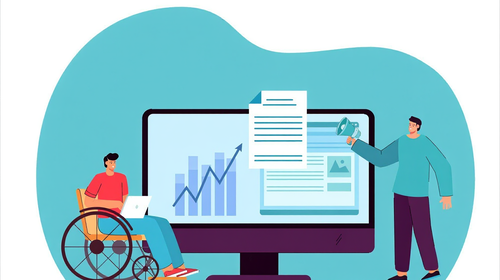
A strategic approach to efficient accessibility evaluations starts with recognizing that accessibility testing is not about doing more work, but about doing the right work at the right time. Efficiency comes from intention, clarity, and repeatable decision-making, not shortcuts.
Understanding the Importance of Accessibility Evaluations
Testing a website for accessibility can be daunting, time-consuming, frustrating, and even unexpectedly fun. When accessibility evaluation is just one responsibility among many, it’s easy to feel overwhelmed or worry that you’re holding up the greater workflow of your company. Accessibility work doesn’t have to stop progress. With a more strategic mindset and the right mix of tools, you can add real value without over complicating the process.
Evaluating accessibility is something that starts to feel natural with practice. It’s the kind of skill that strengthens the more you do it, but still demands attention to detail and familiarity with the work you do. Even seasoned testers rely on experience to guide them, decide what issues are most likely, and know how to approach the work efficiently.
The real time-saver is understanding why you’re evaluating something in the first place. That single decision shapes everything that comes next. Are you looking for major issues? Trying to support a redesign? Checking compliance? Giving developers guidance? Knowing the purpose determines the scope, depth of testing, and the format for how you ultimately create your accessibility report.
When you get the “why” right, you also avoid the trap of over-testing or producing documentation that no one asked for.
Using the Right Accessibility Tools
From there, evaluation becomes a matter of using the right combination of tools rather than looking for the “one tool” that solves everything. No automated checker is perfect and no manual technique covers every situation. Accessibility testers who work quickly, without sacrificing quality, tend to rely on a toolkit. Utilising a number of tools allows them to work faster and with more confidence.
Even with the best tools and a perfect sense of scope, evaluation still comes down to communication. Reports that aren’t tailored to the audience are almost always required to be reworked. When the report format matches the reader, not the writer, you spend less time rewriting, and the people receiving it spend less time confused. Accessibility evaluation gets easier when you shift the focus away from “how fast can I test this?” and toward “how can I make the process smoother?” Efficiency happens in the decisions before the test, in the tools you choose, and in the way you share your results just as much as in the technical testing itself.
Testing accessibility will always require skill and attention, but it doesn’t need to be intimidating or slow. With the right strategies, you can keep things moving and help create more inclusive digital spaces without burning yourself out in the process.
One reason accessibility testing often feels overwhelming is the misconception that it must be exhaustive to be valuable. In reality, effective website accessibility testing is about prioritization. By focusing on high-impact issues that affect real users, such as navigation barriers, unreadable text, or inaccessible forms, you can make meaningful improvements without reviewing every line of code. This approach not only saves time but also aligns accessibility work with real-world user needs, which is ultimately the goal of inclusive design.
Another important factor to consider is integrating accessibility evaluation into existing workflows rather than treating it as a separate phase. When accessibility checks are introduced earlier in the design or development process, issues are easier and less expensive to fix. This approach to accessibility testing supports better collaboration between designers, developers, and content creators. It also reduces the pressure of last-minute accessibility reviews, which are often rushed and stressful.
Integrating Accessibility into Workflow
For teams working on ongoing projects, consistency matters just as much as speed. Establishing a repeatable accessibility testing process helps reduce decision fatigue and improves overall quality. Simple checklists, shared testing guidelines, and documented testing patterns can go a long way toward making accessibility evaluation more predictable and less intimidating. Over time, these small process improvements compound, making accessibility testing feel like a normal part of quality assurance rather than a special, high-effort task.
Accessibility testing also benefits from a mindset shift around learning. You do not need to know everything at once. Web accessibility standards, assistive technologies, and testing tools evolve, and no single person has all the answers. Treating accessibility evaluation as an ongoing learning process makes it easier to stay engaged and avoid burnout. Each test adds to your understanding and improves your ability to spot issues quickly in the future.
Ultimately, accessibility evaluations are about progress, not perfection. Every improvement removes barriers and opens digital experiences to more people. When approached strategically, accessibility testing becomes less about checking boxes and more about building better, more resilient websites.
By focusing on purpose, process, and communication, you can make accessibility work sustainable, effective, and genuinely impactful over the long term.