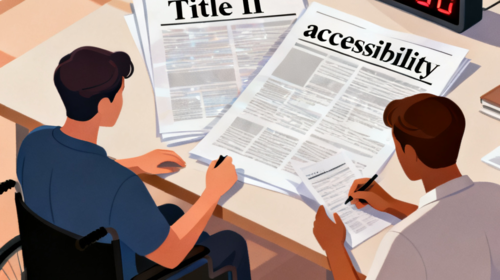
The U.S. Department of Justice has officially extended the compliance deadlines for the ADA Title II web and mobile accessibility rule by one year. For many public entities, educational institutions, and organisations working with them, this is significant news.
Originally, larger public entities were required to comply by April 24, 2026. That date has now moved to April 26, 2027. Smaller public entities and special district governments now have until April 26, 2028.
So why did this happen, why does it matter, and what should organisations do next?
Why Was the Deadline Extended?
The original Title II rule introduced clear technical accessibility requirements for websites and mobile apps operated by state and local governments. These requirements are based on WCAG 2.1 AA.
However, many organisations faced challenges including:
- Large volumes of legacy PDFs and documents
- Multiple disconnected websites
- Limited internal expertise
- Budget constraints
- Dependence on third-party systems
- Staffing shortages
The DOJ’s extension recognises that many entities needed more time to build sustainable accessibility programs rather than rush incomplete fixes.
Why This Matters
Some organisations may view the extension as permission to pause. That would be a mistake.
The legal deadline moved, but the expectation of equal digital access did not. Public entities still have obligations under the ADA to provide effective communication and equal access to services. The extension changes timing, not responsibility.
This matters because accessibility affects real users every day:
- Students accessing learning materials
- Residents paying bills online
- Patients booking appointments
- Job applicants completing forms
- Citizens using public information portals
Delays in accessibility mean delays in access.
Why This Is Actually Good News
For organisations that act strategically, the extra year creates a major opportunity.
Instead of last-minute remediation, they can now:
- Conduct proper audits
- Fix templates and systems first
- Train staff teams
- Improve procurement processes
- Replace inaccessible vendors
- Build accessibility into workflows
- Create long-term structures
This is the difference between emergency compliance and lasting digital inclusion.
What Public Entities Should Do Now
1. Audit Everything
Identify websites, portals, mobile apps, PDFs, forms, and third-party tools. Many organisations underestimate how much digital content they own.
2. Prioritise High-Risk Areas
Start with:
- Admissions and enrolment
- Payments
- Student systems
- HR portals
- Public forms
- Service booking systems
3. Fix Core Templates
Repairing headers, navigation, forms, and reusable templates often improves thousands of pages at once.
4. Address PDFs and Documents
Legacy documents remain one of the biggest barriers. Focus on documents still in active use.
5. Train Internal Teams
Developers, marketers, content editors, procurement staff, and leadership all need role-specific training.
What Educational Institutions Should Do
Public schools, colleges, and universities should use this time wisely. Learning platforms, course materials, admissions systems, and student portals all fall under increasing scrutiny.
Institutions that start now will avoid rushed remediation later and improve student experience immediately.
The deadline extension is not a reset button. It is a strategic window.
Organisations that treat this extra year as breathing room may struggle again next spring. Organisations that use it to build systems, processes, and accountability will be ready—and stronger because of it.